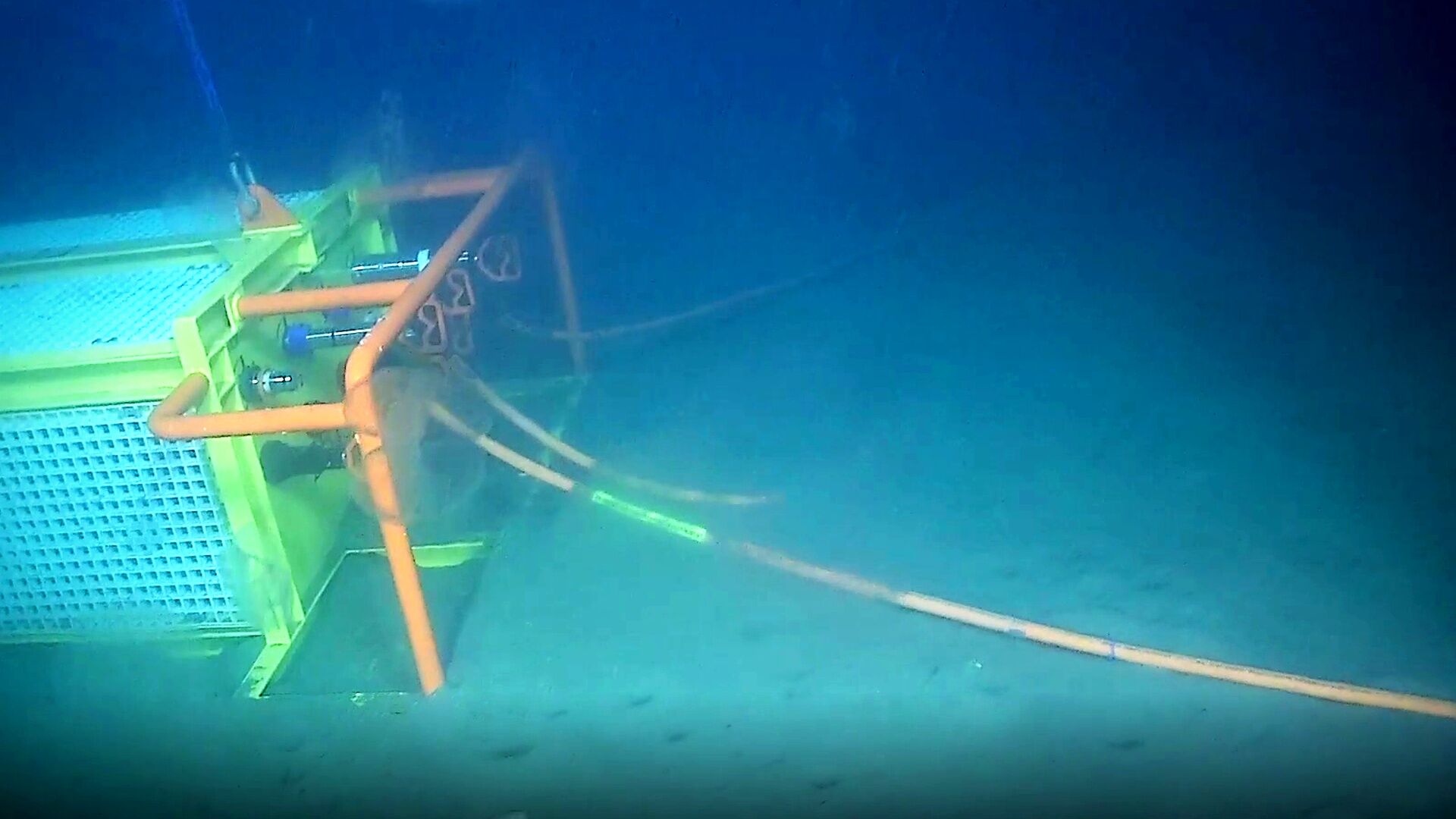
A Flocean plant stands on the seabed at 450 metres or deeper. At that depth the water pressure is close to what reverse osmosis needs, so seawater can be pushed through the membranes without the large high-pressure pumps of a land plant.
Seawater is taken in far below the surface. Little light reaches that deep, so the water is cold and clean, with little algae.
The weight of the water above presses seawater through the membranes. Pumps only have to move the freshwater.
The freshwater goes ashore through a subsea pipeline to a small pumping station.
What is left is only slightly saltier than the sea around it, has no added chemicals and mixes back in at depth.
The sea gives the pressure that big pumps have to make on land.
Only a small pumping station is needed ashore.
No process chemicals, and the brine is diluted at depth.
Standard modules are built in a workshop and installed from a vessel.
Surface storms and algal blooms do not reach it, and it is hard to get at.
Source: Flocean, October 2026
Flocean One proved the concept at 1 MLD. Commercial plants use a larger standard train, built from modules in a workshop and installed from a vessel. A plant starts with one train and adds more as demand grows.

